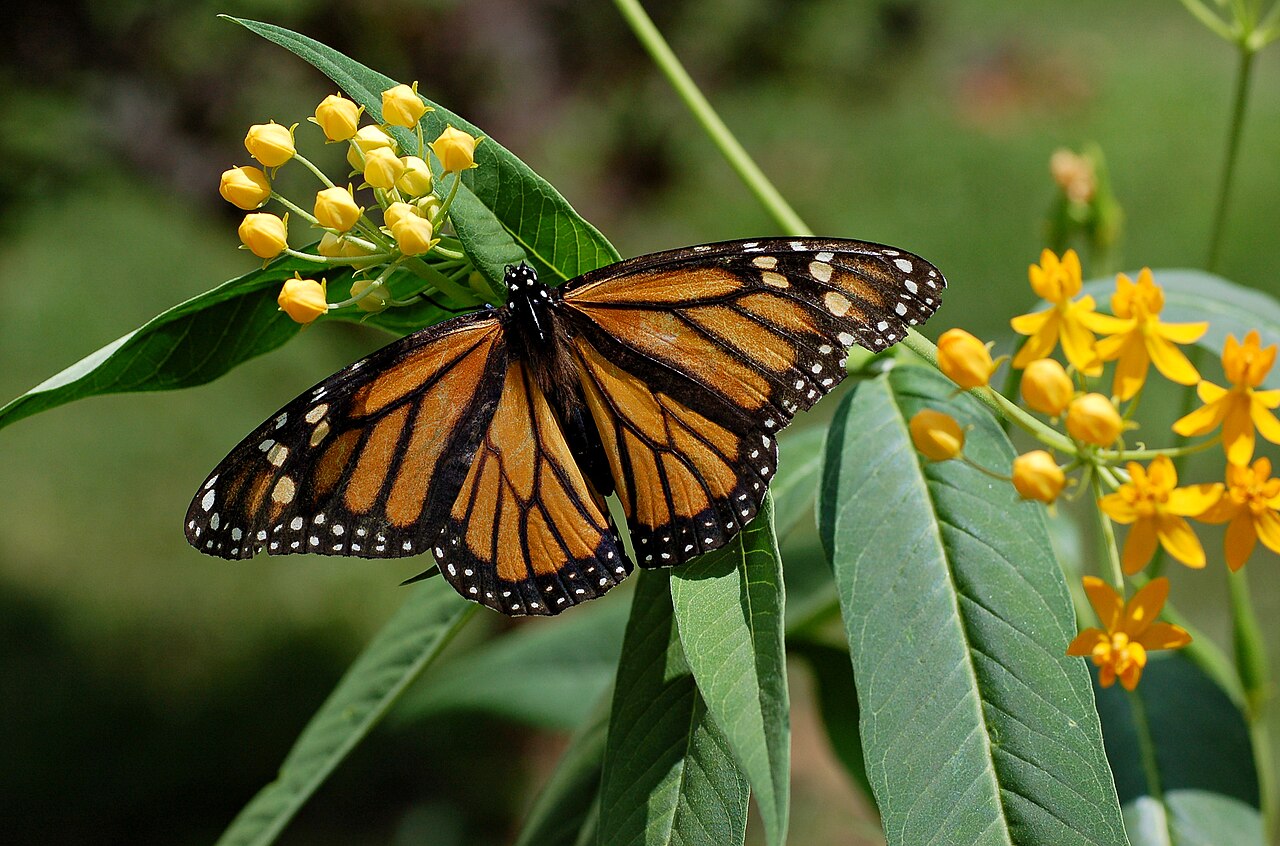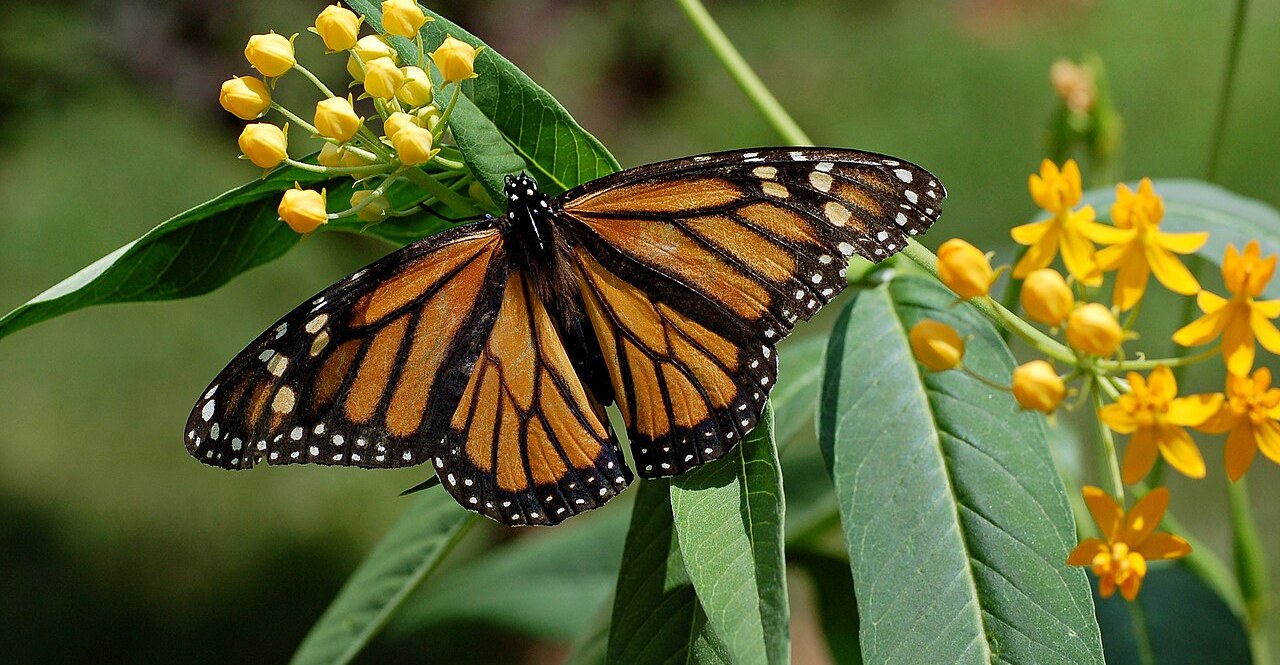
A Monarch butterfly with wings spread wide, resting on bright yellow milkweed flowers

Butterflies & Moths of North America

Welcome, wing watcher! Meet 40 of the butterflies and moths you can actually find in gardens, fields, and forests near you — and learn how to tell them apart.

40 species30 butterflies · 10 moths6 groupsColoring pagesButterfly or Moth? game
You've spotted 0 of 40

Butterfly & Moth Basics

Four things every wing watcher should know.

Butterfly or Moth?

They are close cousins, but you can usually tell them apart:

  • Antennae: butterflies have thin feelers with a little club or knob on the end. Moth antennae are feathery or thread-like, with no club.
  • Wings at rest: butterflies fold their wings straight up over their backs. Most moths rest with wings spread flat or tented over the body.
  • Day or night: butterflies fly by day. Most moths fly at night — but watch out, some moths, like the Hummingbird Clearwing, fly in broad daylight!
  • Body: butterflies are slim and smooth; moths are often plump and fuzzy.
From Egg to Wings

Every butterfly and moth goes through four stages, called complete metamorphosis:

  • Egg — laid on or near the one plant the babies can eat.
  • Caterpillar — the eating-and-growing stage. It sheds its skin several times as it grows.
  • Pupa — a butterfly makes a smooth chrysalis; many moths spin a silk cocoon around theirs. Inside, the whole body is rebuilt.
  • Adult — out comes a winged flyer whose job is to find a mate and start the cycle again.

The Monarch's Great Trip

Every fall, Monarchs from across eastern North America fly up to 3,000 miles to a handful of mountain forests in Mexico — a trip no single butterfly has ever made before, because the travelers are the great-great-grandchildren of the ones who flew north in spring.

They find their way by the sun and the Earth's magnetic field, then cluster by the millions on oyamel fir trees until spring. Planting native milkweed — the only food Monarch caterpillars can eat — is the single best way to help them keep making the trip.

How You Can Help

  • Plant native flowers for nectar and host plants like milkweed, parsley, and pawpaw for caterpillars.
  • Skip bug sprays in the garden — they don't tell a pest from a pollinator.
  • Leave fall leaves in a corner of the yard; many moths sleep the winter away hidden in them.
  • Turn off porch lights you don't need at night so moths don't waste their energy circling them.

Meet the Whole Family

Nine free field guides, one wild continent. Tap a card to visit a sister guide.

Photo Credits

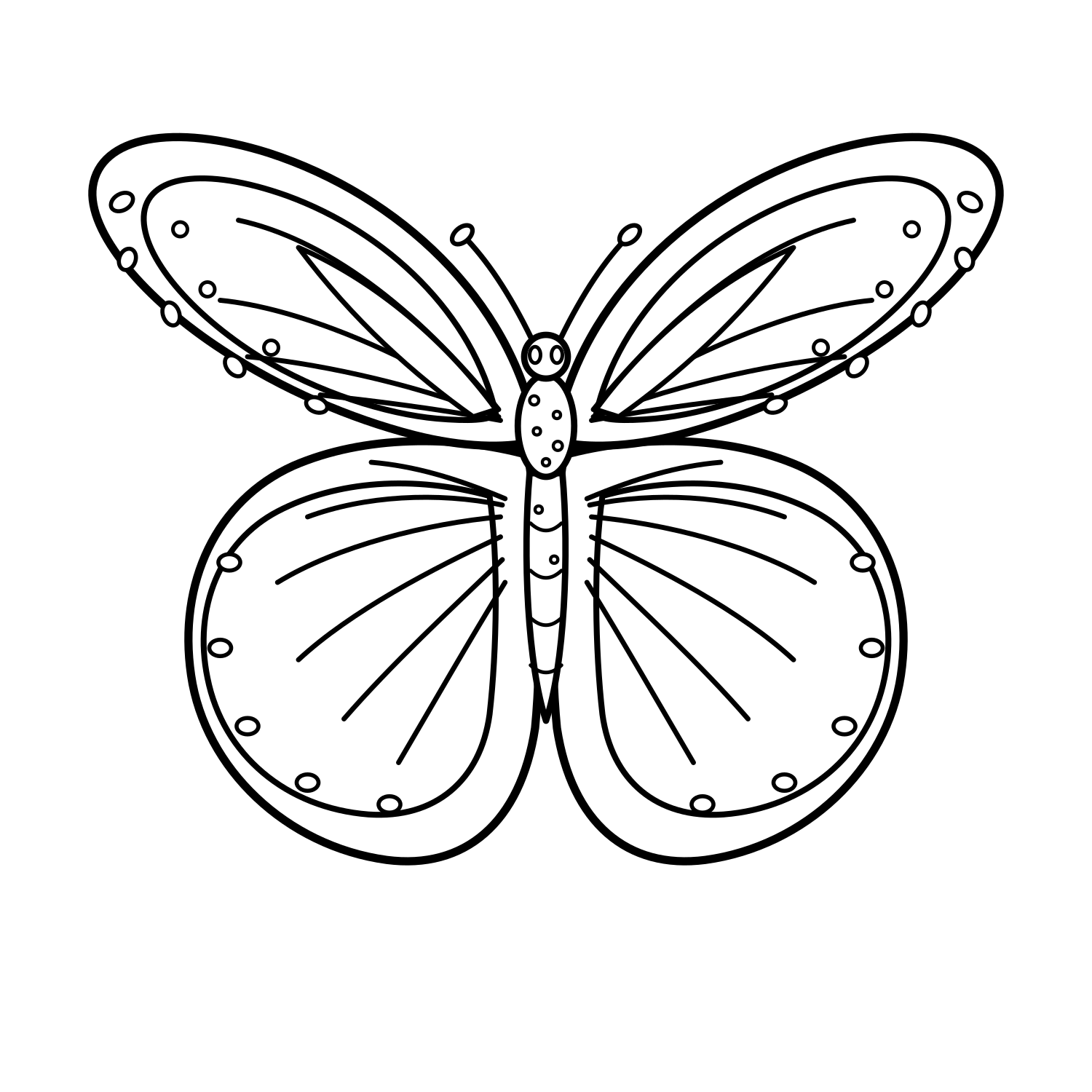
Every photo on this page is freely licensed and shared through Wikimedia Commons. Coloring pages are line art traced from the same photos.